
Where fluid properties and site geometry make the method applicable, Willowstick can characterize conductive subsurface anomalies associated with pipeline leakage. The results help narrow a long right-of-way to segments for confirmatory testing and targeted excavation; they do not replace direct integrity or leak-detection methods.
Application · Pipelines
Pipelines
Prioritize suspected leak zones before trenching a long pipeline route.
The Problem
A buried leak hides in miles of right-of-way.
A losing pipeline can run for miles, and the leak betrays itself only through subsurface water movement that rarely surfaces directly above the breach. Excavating to find it is destructive and expensive when done blind.
Route-scale Survey coverage
Focused Excavation targets
Non-destructive Survey method
How Willowstick Maps It
The method, applied to pipelines.
01
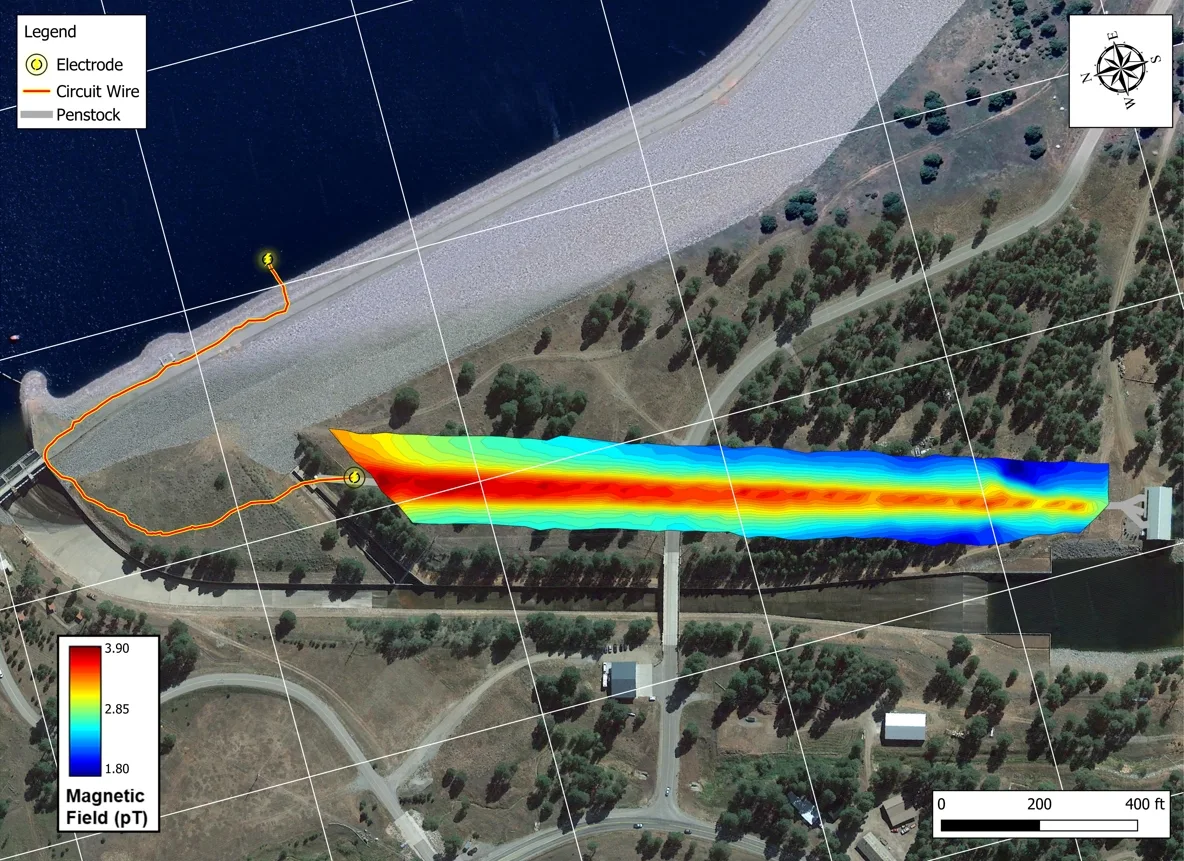
Establish a controlled circuit: where MM-ECD is appropriate, electrodes are positioned so a signature alternating current passes through the corridor of interest. Its distribution responds to fluid chemistry, saturation, geology, and other controls on bulk conductivity.
02
Measure the response: the Willowstick instrument records the resulting three-axis magnetic field at georeferenced stations on a surface grid, narrowing the area considered for direct leak detection or excavation.
03
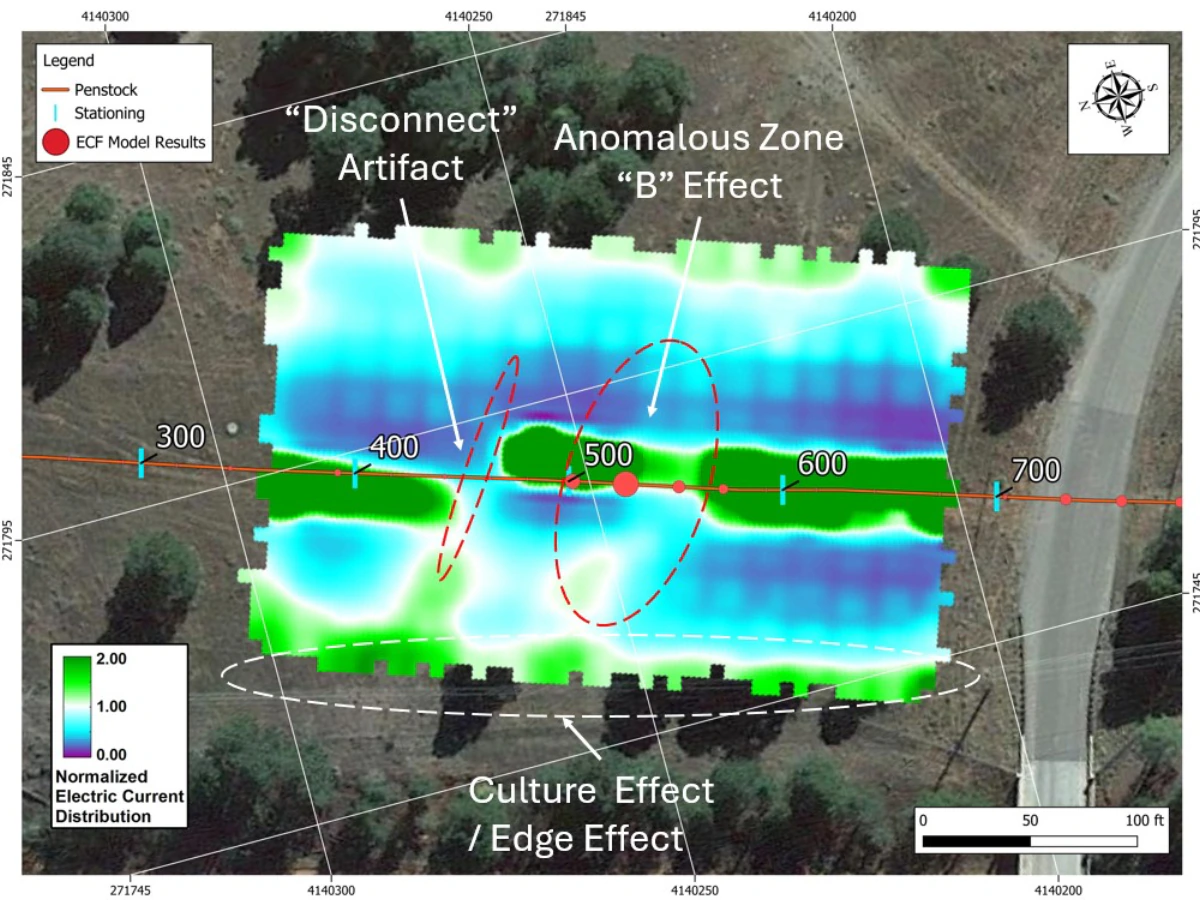
Model and interpret: measured data are normalized against a homogeneous-earth reference and processed into electrical-current models. Pipeline records, pressure or flow data, geology, and field observations guide interpretation.
04
Deliver prioritized segments: the report presents mapped anomalies, interpreted targets, and limitations so operators can focus confirmatory leak detection and excavation.
Proof
Relevant case studies
Case study
Civil & Tunnels Water Investigation
Central America
Willowstick applied surface-grid geophysics to civil and tunnel works in Central America, interpreting preferential conductive pathways relevant to construction and water control.
Read the investigation → Case studyUnique Applications of MM-ECD
Publication
A publication surveying the range of problems Willowstick’s Magnetometric Electrical Current Distribution (MM-ECD) method can address across sectors, with its applications and interpretive context collected in one place.
Read the investigation →Start Here
See what’s moving beneath your pipelines.
Field acquisition is often completed in days and interpretation in weeks. Timing, depth of investigation, and deliverables are scoped to the site, method mix, and decision.