
Willowstick uses MSR, and MM-ECD where appropriate, to add spatial constraints on subsurface discontinuities, conductive zones, and potential fluid-transfer structures. Integrated with geology, geochemistry, temperature, and well data, the interpretation helps developers rank exploration targets and refine a resource model before committing to additional drilling.
Application · Geothermal
Geothermal
Add spatial evidence to geothermal structure and fluid-target interpretation.
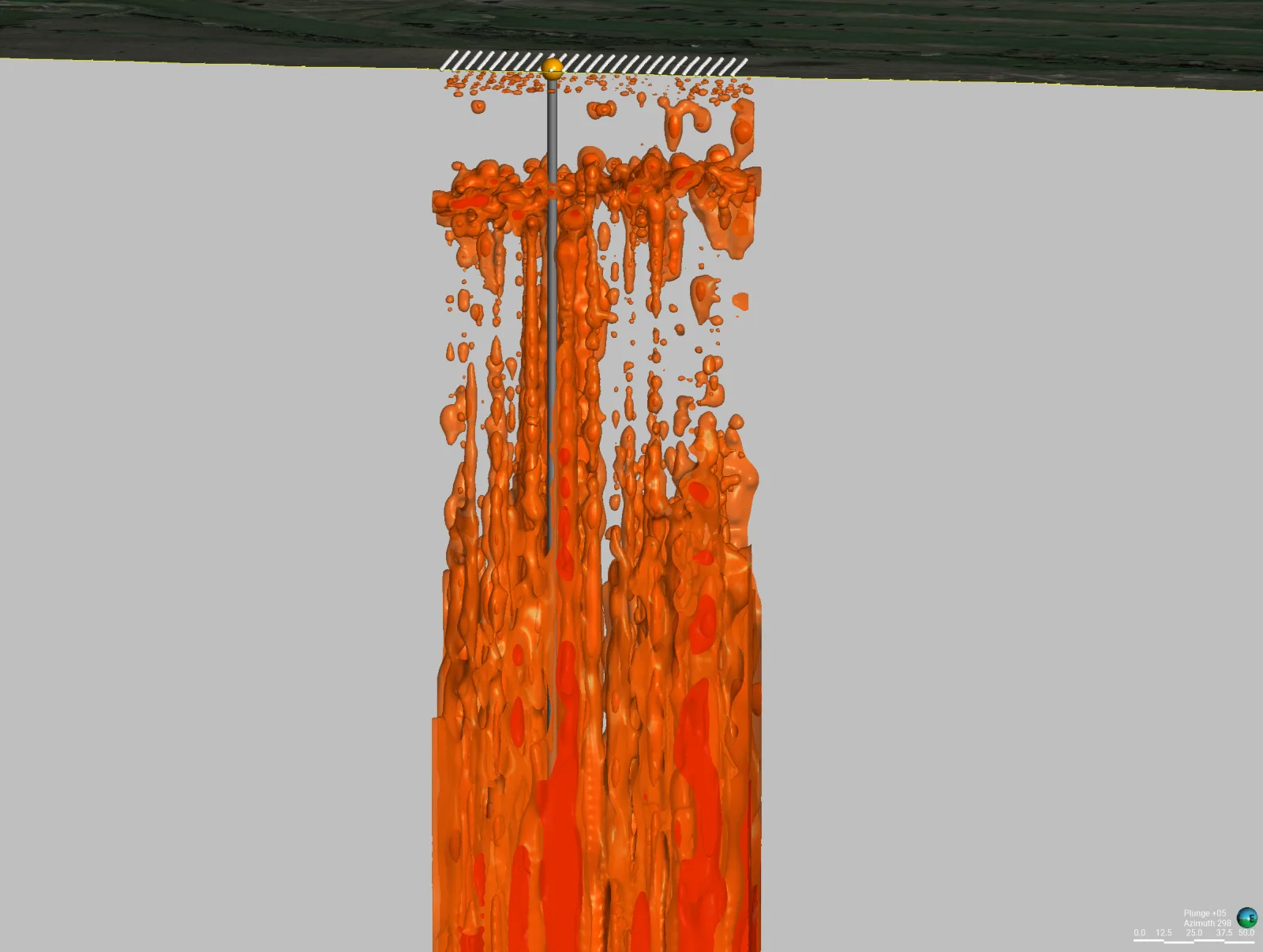
The Problem
A geothermal resource is only as good as its plumbing.
Geothermal productivity depends on temperature, permeability, pressure, recharge, fluid chemistry, and connected fractures or porous units. No surface geophysical method determines production by itself, so target selection should integrate geophysics with geology, geochemistry, and available well data.
Fluid-path Characterization
Well Placement support
Surface-based Geophysical acquisition
How Willowstick Maps It
The method, applied to geothermal.
01
Match the method to the resource: Microseismic Resonance (MSR) records naturally occurring ground vibrations to characterize resonance anomalies and subsurface discontinuities. MM-ECD can add a controlled-source conductivity constraint where survey geometry and site conditions permit.
02
Survey from the surface: georeferenced measurements are collected across the area of interest without drilling solely for geophysical data acquisition. Existing wells and direct observations remain important constraints.
03
Build an interpretation: processed anomalies are integrated with structural geology, temperature, chemistry, and well information to identify zones that may support fluid storage or transfer.
04
Rank targets: results help prioritize locations for confirmatory exploration and drilling; temperature, permeability, and sustainable yield are verified by direct testing.
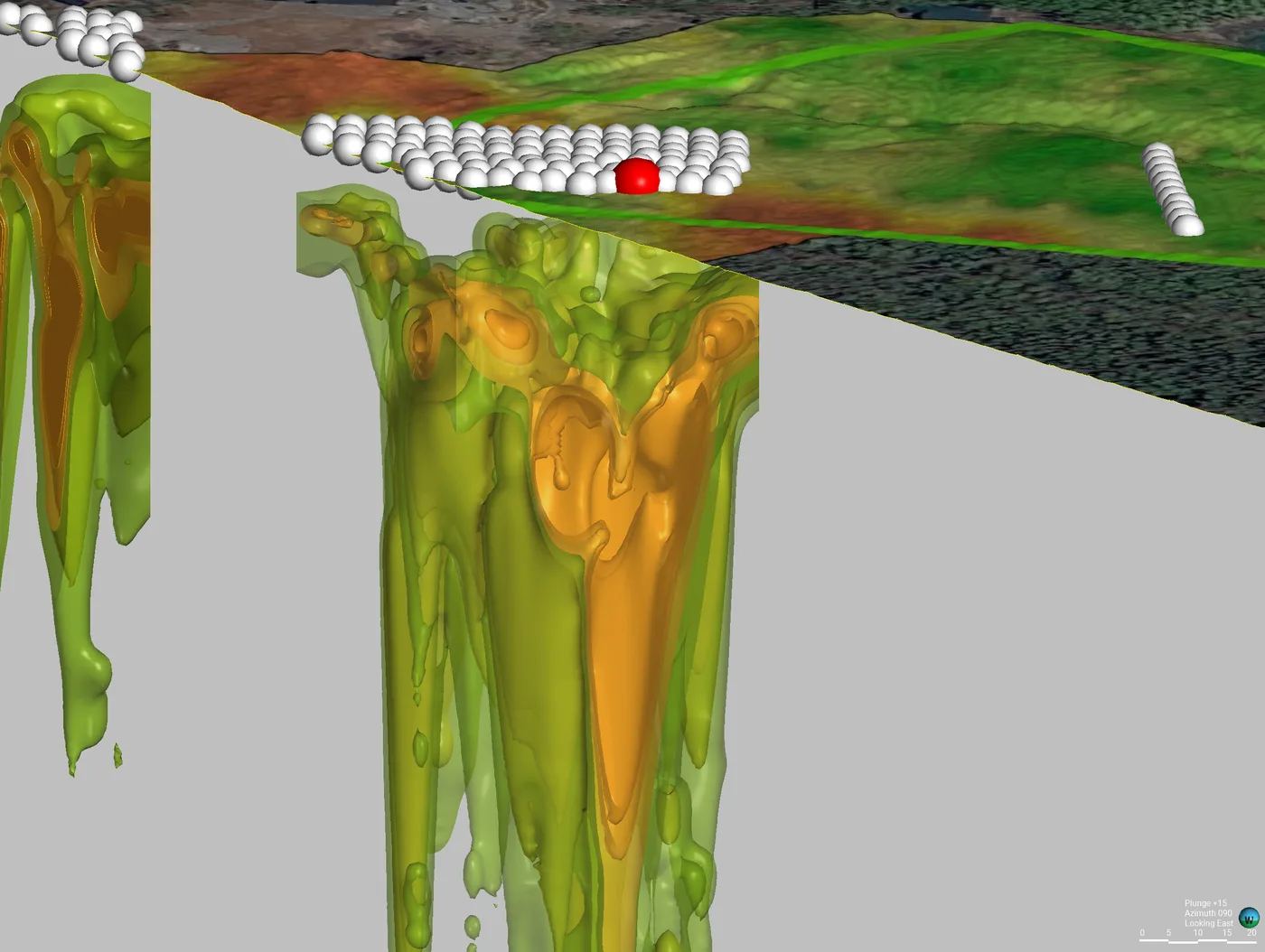
Proof
Relevant case studies
Start Here
See what’s moving beneath your geothermal.
Field acquisition is often completed in days and interpretation in weeks. Timing, depth of investigation, and deliverables are scoped to the site, method mix, and decision.